The Free Nutritious Meal (MBG) Program is a national initiative designed to enhance the quality of human resources by fulfilling the nutritional needs of students across Indonesia. Given its vast scope of beneficiaries and significant budget allocation (IDR 335 trillion), public expectations for this program are naturally high.
However, the immense scale and complexity of the MBG program’s implementation present serious challenges. Gaps between targets and realization persist, including cases indicating weak quality control, such as food poisoning incidents in several regions. Furthermore, the selection process for implementing partners lacks full transparency, the quality standards for raw materials remain limited, and the inconsistent application of food safety standards reveals governance loopholes that pose potential risks to beneficiaries. These issues are exacerbated by an oversight system that remains partial, reactive, and not yet integrated with data-driven mechanisms.
Despite high public expectations, the government’s official grievance channel, SP4N-LAPOR! (National Public Service Complaint Management System – People’s Online Convention and Complaint Service), has not been optimally utilized. In fact, this system holds a strategic role in ensuring the accountability of national priority programs.
Instead of using official channels, the public tends to voice complaints through social media and informal routes. Consequently, grievances regarding nutritional content, hygiene, menu variety, and consumption safety are not systematically documented and fail to serve as a basis for service evaluation. Worse, some complainants on social media have reported facing intimidation from irresponsible parties.
Strengthening SP4N-LAPOR! for MBG Grievances
SP4N-LAPOR! has long served as the government’s sole official channel for complaints, aspirations, and information requests. Specifically for the MBG Program, the National Nutrition Agency (BGN) actually operates a channel called SAGI (Nutrition Complaint Center Indonesia). However, this channel is currently being integrated into SP4N-LAPOR! so that all MBG-related grievances will eventually be consolidated into the national complaint database.
Technical integration into SP4N-LAPOR! does not automatically ensure well-managed complaints if the channel is not widely recognized or used. The Executive Director of PATTIRO, Fitria Muslih, emphasized that the strategic role of SP4N-LAPOR! needs a stronger push.
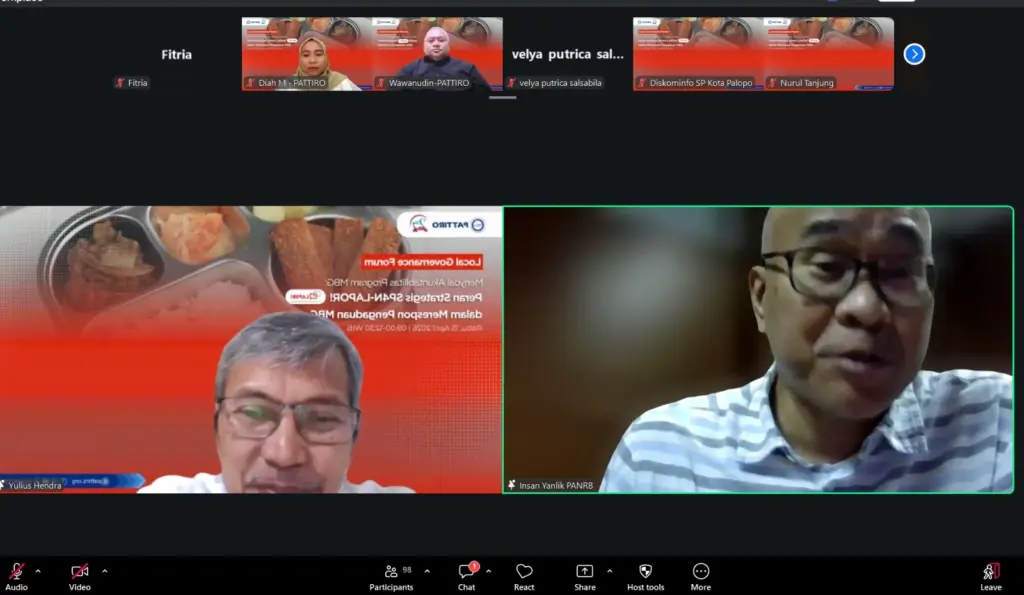
“SP4N-LAPOR! needs to be socialized in schools to facilitate complaints regarding the MBG program. We must prevent the public from only complaining on social media, where reports remain scattered and unmanaged,” Fitria stated during the virtual Local Governance Forum titled “Questioning MBG Program Accountability: The Strategic Role of SP4N-LAPOR! in Responding to MBG Complaints,” organized by PATTIRO on Wednesday (April 15, 2025).
Complaints for National Priority Programs
The urgency of promoting SP4N-LAPOR! to schools and the wider public is underscored by data from the Ministry of Administrative and Bureaucratic Reform (KemenPAN RB), which shows that complaints for the MBG Program significantly lag behind another priority program, the Welfare Card Program.
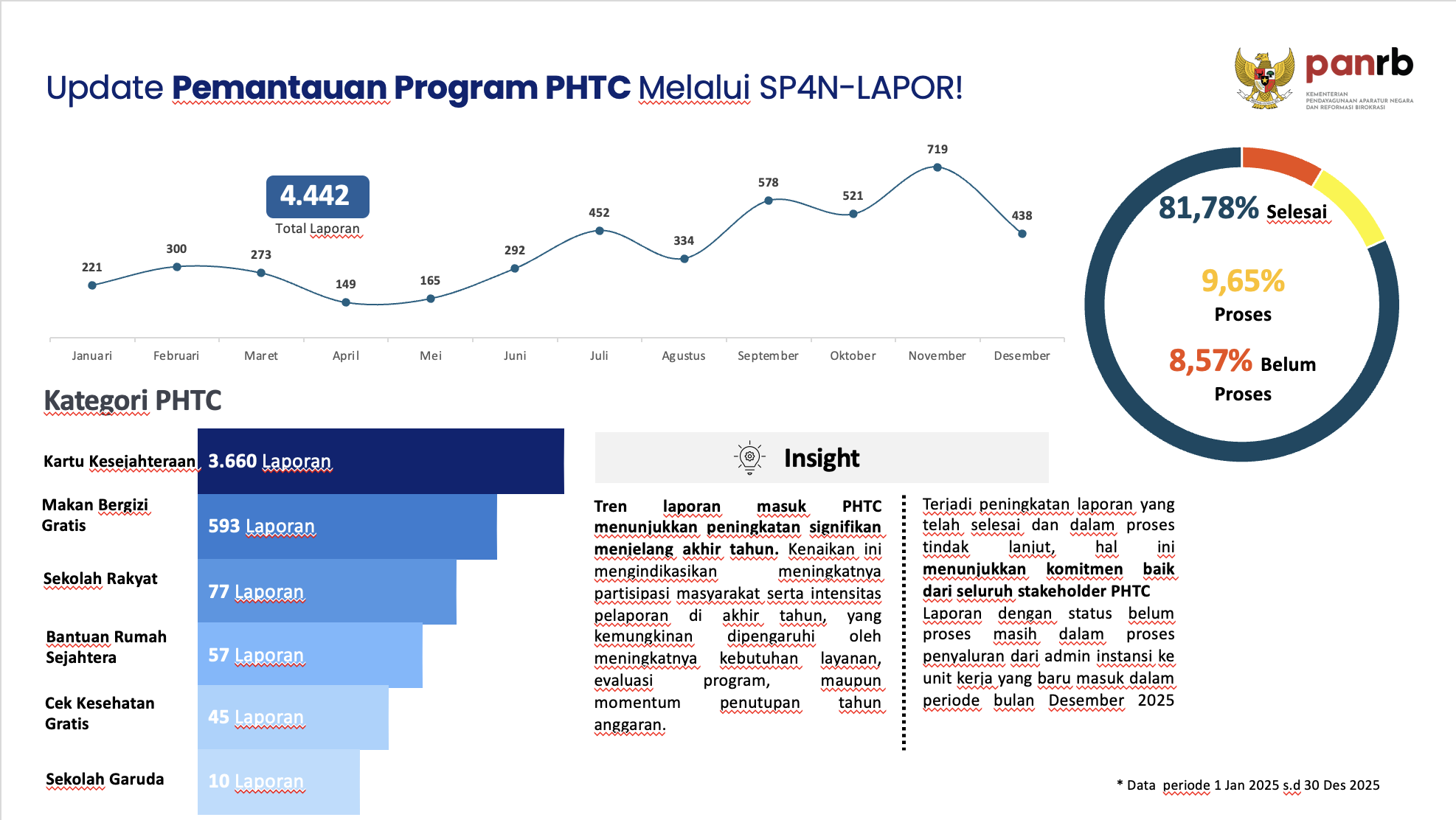
Insan Fahmi, Assistant Deputy for Public Participation Empowerment at KemenPAN RB, explained that in 2025, reports submitted through SP4N-LAPOR! for the Quick Win Programs (PHTC) reached 4,442 reports. Out of that number, only 593 reports were specifically related to the MBG Program.
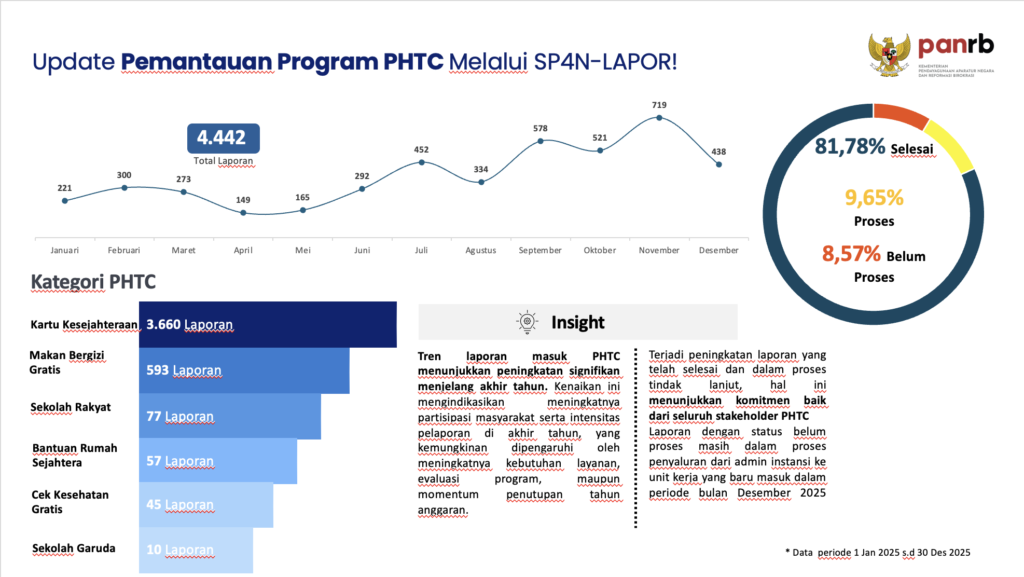
“The trend for PHTC reports shows a significant increase toward the end of the year, indicating rising public participation,” Insan explained.
The advantage of SP4N-LAPOR! lies in its real-time accountability. All incoming reports can be monitored through the PHTC dashboard at s.id/DashboardPHTC, which serves as a data source for the Presidential Daily Brief. The status, trends, and distribution of reports are presented transparently to support data-driven decision-making.
Complaints are a Gift to the Government
Responding to this, PATTIRO Program Manager for transparency and public service, Wawanudin, reminded that public complaints regarding development programs are not threats, but rather gifts. If managed well, complaints serve as effective corrective tools to improve public services.
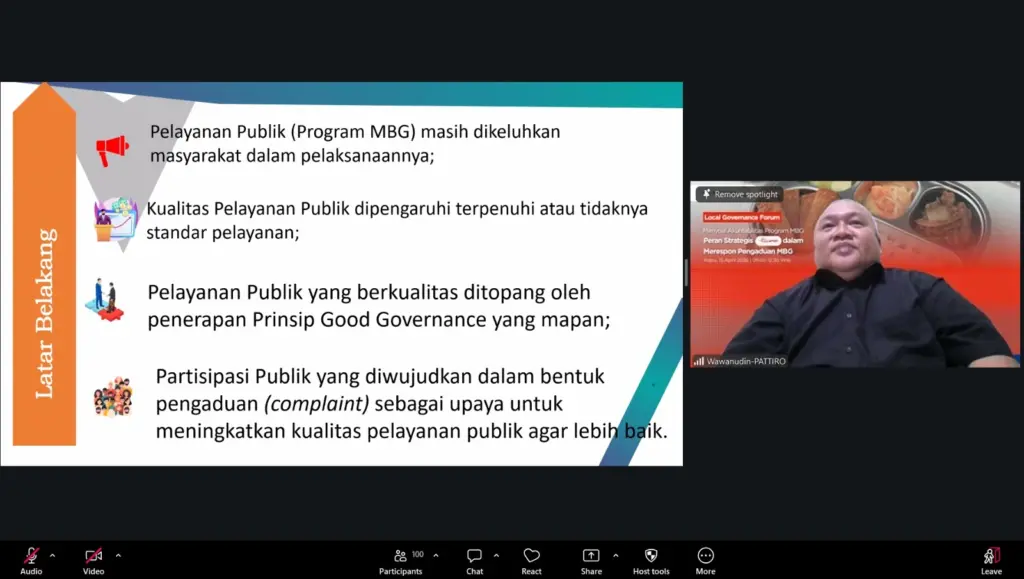
“Public participation manifested through complaints is an effort to enhance the quality of public services,” Wawanudin concluded.
Law Number 25 of 2009 on Public Services mandates that every service provider must manage complaints as part of their evaluation. By utilizing SP4N-LAPOR!, the government possesses a structured system to follow up on every grievance.