The reduction of Transfers to Regions (TKD), which occurred again in 2026, along with the rise of centrally driven top-down programs implemented in the regions, has raised concerns about the weakening of regional autonomy. The TKD funds that had already been reduced in 2025 were cut again significantly in 2026 to 693 trillion rupiah, a 24.7% decrease compared to the previous year’s 864 trillion rupiah.
Amid fiscal pressure and the growing burden of implementing national programs, regional governments are considered to be losing more room to determine their own development priorities and public services. Several regions are also facing delayed disbursement issues due to late transfers from the central government. At the same time, regions are required to support various national priority programs, further limiting their fiscal space.
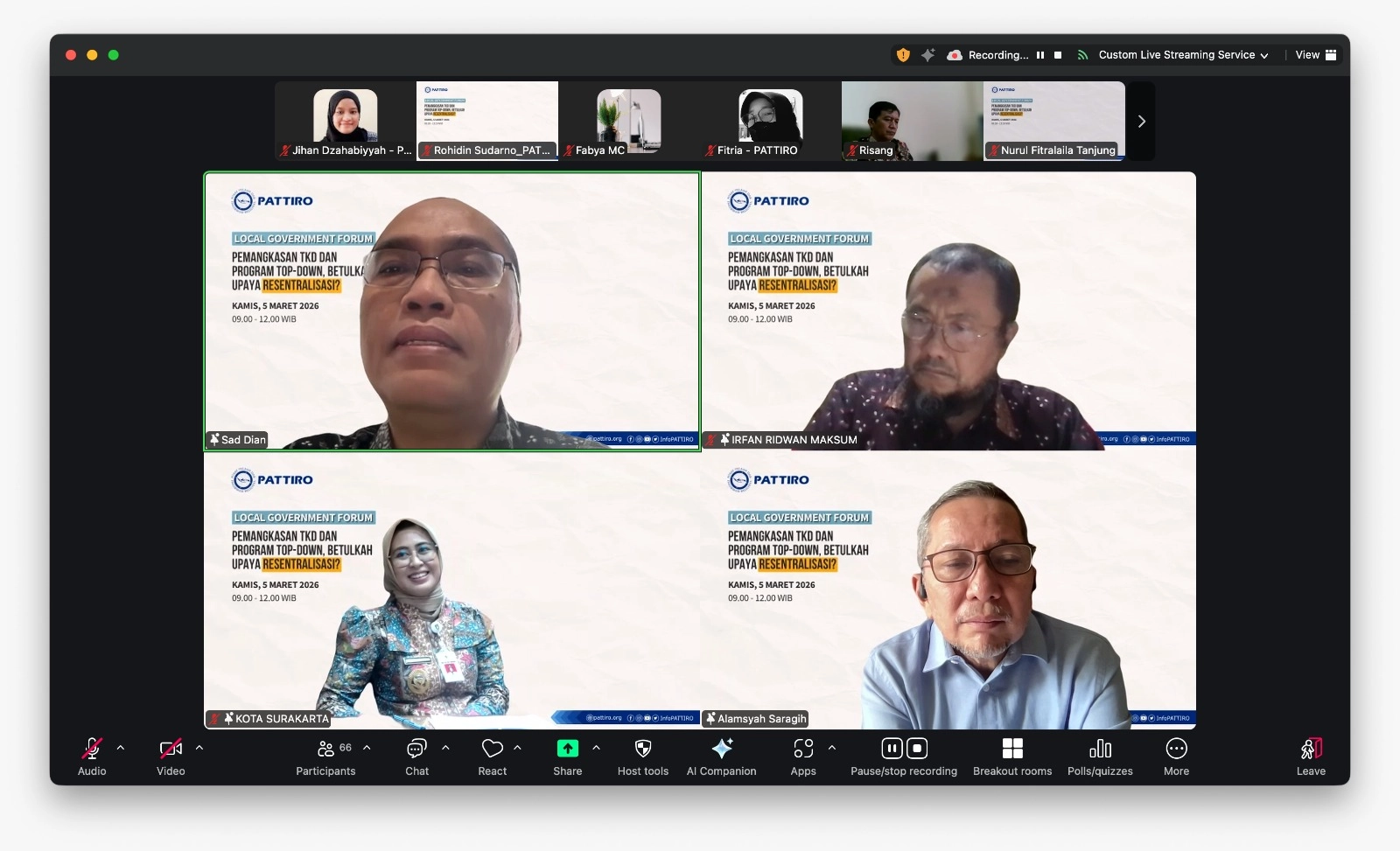
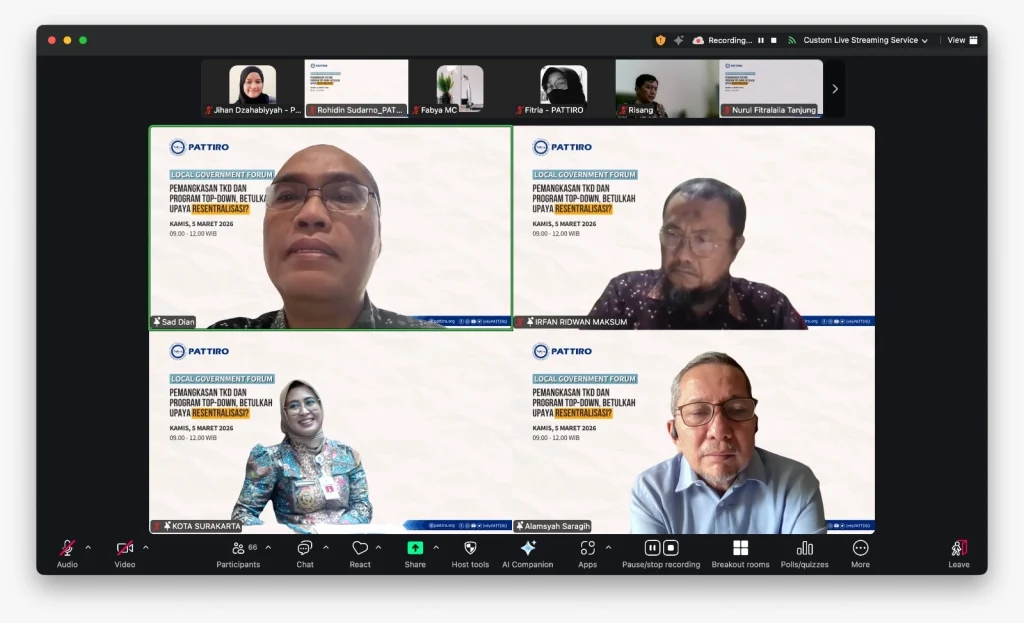
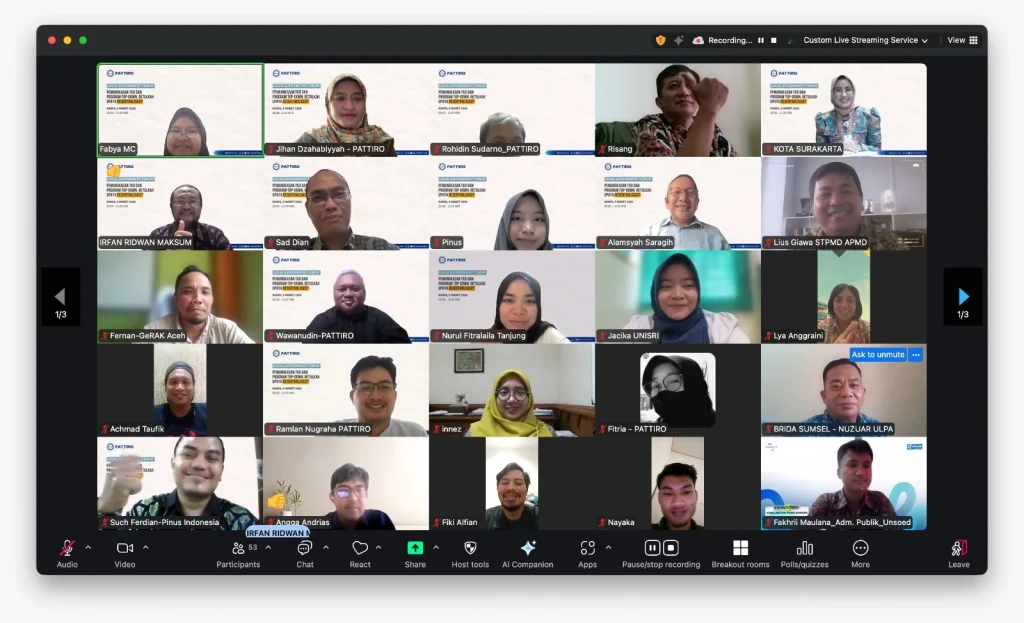
“Regions have to finance many programs initiated by the central government, such as Sekolah Rakyat (People’s Schools), Koperasi Desa Merah Putih (KDMP), and the Free Nutritious Meals Program (MBG),” said PATTIRO Executive Director Fitria during the Local Governance Forum titled TKD Cuts and Top-Down Programs: Is This an Attempt at Recentralization?, held online on Thursday (March 5, 2026).
The Deputy Mayor of Surakarta, Astrid Widayani, explained that the implementation of various national policies still requires strong institutional and fiscal capacity from local governments.
“The success of the MBG Program implemented in Solo City is highly dependent on service capacity at the regional level,” Astrid said. She explained that several challenges remain in its implementation, including the quality and variety of food menus, food distribution to schools, the readiness of production kitchens, and the need to communicate the program effectively to the public.
Changes in Central–Local Government Relations
The issue of central–local relations is not only about fiscal matters but also about the political and institutional design of decentralization in Indonesia.
Irfan Ridwan Maksum, Professor of Administrative Science at the University of Indonesia, believes that regional autonomy in Indonesia has largely been administrative rather than political.
“The dominance of national political parties in the local political system, preventive regulations from the central government, and the presence of various vertical ministerial institutions in the regions have narrowed the autonomy space of local governments,” Irfan explained.
In addition, the enactment of Law No. 1 of 2022 on Financial Relations between the Central Government and Regional Governments (HKPD Law) is considered to potentially encourage a centralizing tendency in fiscal relations between the central and regional governments.
After the HKPD Law came into effect, the central government gained greater authority to determine the limits of local government powers and institutional arrangements. Therefore, according to Irfan, regulations governing regional financial management need to be improved to provide greater flexibility for local governments in managing their budgets. He argued that the contents of Regional Regulations (Perda) on Regional Budgets (APBD) should not be regulated in excessive detail down to the level of individual expenditure accounts.
“Regional budget regulations should be drafted in a more general manner so that local governments have the flexibility to adjust budget usage according to evolving needs,” he said.
This recentralization trend is also reflected in the earmarking practices imposed on regional budget usage. Alamsyah Saragih, a public information transparency observer and former member of the Indonesian Ombudsman (2016–2020), believes that such practices indicate the central government’s low level of trust in regional governments’ ability to manage their autonomy.
Ironically, this tendency toward recentralization has not been met with significant resistance. Both local governments and the public are seen as not yet showing strong responses to the increasing fiscal control of the central government.
“This raises concerns that local governments may gradually lose their relevance in the eyes of the public if they cannot demonstrate a tangible role in providing public services,” Alamsyah said.
Preserving Regional Autonomy
Despite the various challenges in implementing regional autonomy, the solution is not to pull authority back to the central government. Instead, what is needed is stronger fiscal capacity, greater flexibility in regional budget management, and improvements in the design of central–local fiscal relations, so that local governments can perform their roles optimally in delivering public services and promoting regional development.
Strengthening synergy between the central and regional governments is key to ensuring that national policies do not further narrow regional fiscal space, but rather strengthen the capacity of local governments to improve the quality of public services and the welfare of communities.