
Description
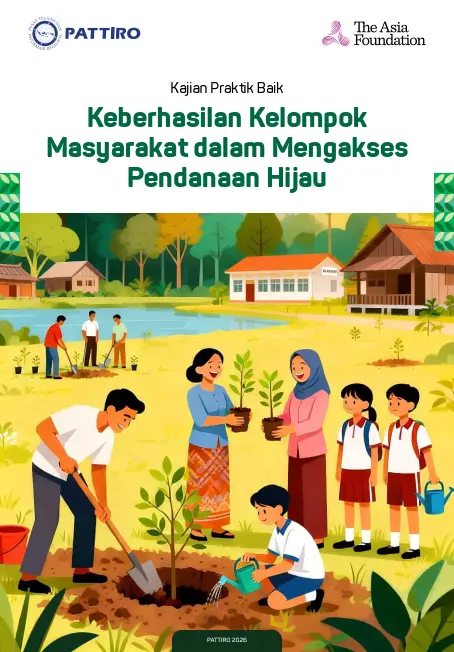
This policy brief argues that the availability of a funding scheme does not guarantee equitable access for communities. The Community Fund Service (LADAMA), through a Small Grant scheme funded by Indonesia–Norway cooperation, supports community initiatives toward the FOLU Net Sink 2030 target and, as of Period IV, has disbursed around Rp29.08 billion to 863 groups. However, of the 75 communities PATTIRO assisted in Batch 4, only 12 (16%) were designated as recipients, with total funding of Rp506.66 million. The barriers identified include limited digital and geographic access, difficulty preparing proposals and Budget Plans (RAB) that match local prices, uncertain disbursement schedules, inconsistent information at partner bank branches, and recipient data that is not yet disaggregated by gender and disability.
To address these findings, the policy brief proposes four improvement agendas: affirmative access for vulnerable groups and regions, budgeting guidelines adaptive to local conditions, certainty of timing and accountability in disbursement, and standardized information and procedures for disbursement through partner banks. These recommendations are directed primarily at the Ministry of Forestry and BPDLH, with partner banks involved. Good practices from recipient communities, such as programs based on real local needs, multi-stakeholder collaboration, and member participation including women, can also be institutionalized in the design of LADAMA. The key message: expanding community-based funding access is not achieved by building recipient capacity alone, but also requires a more adaptive service design.