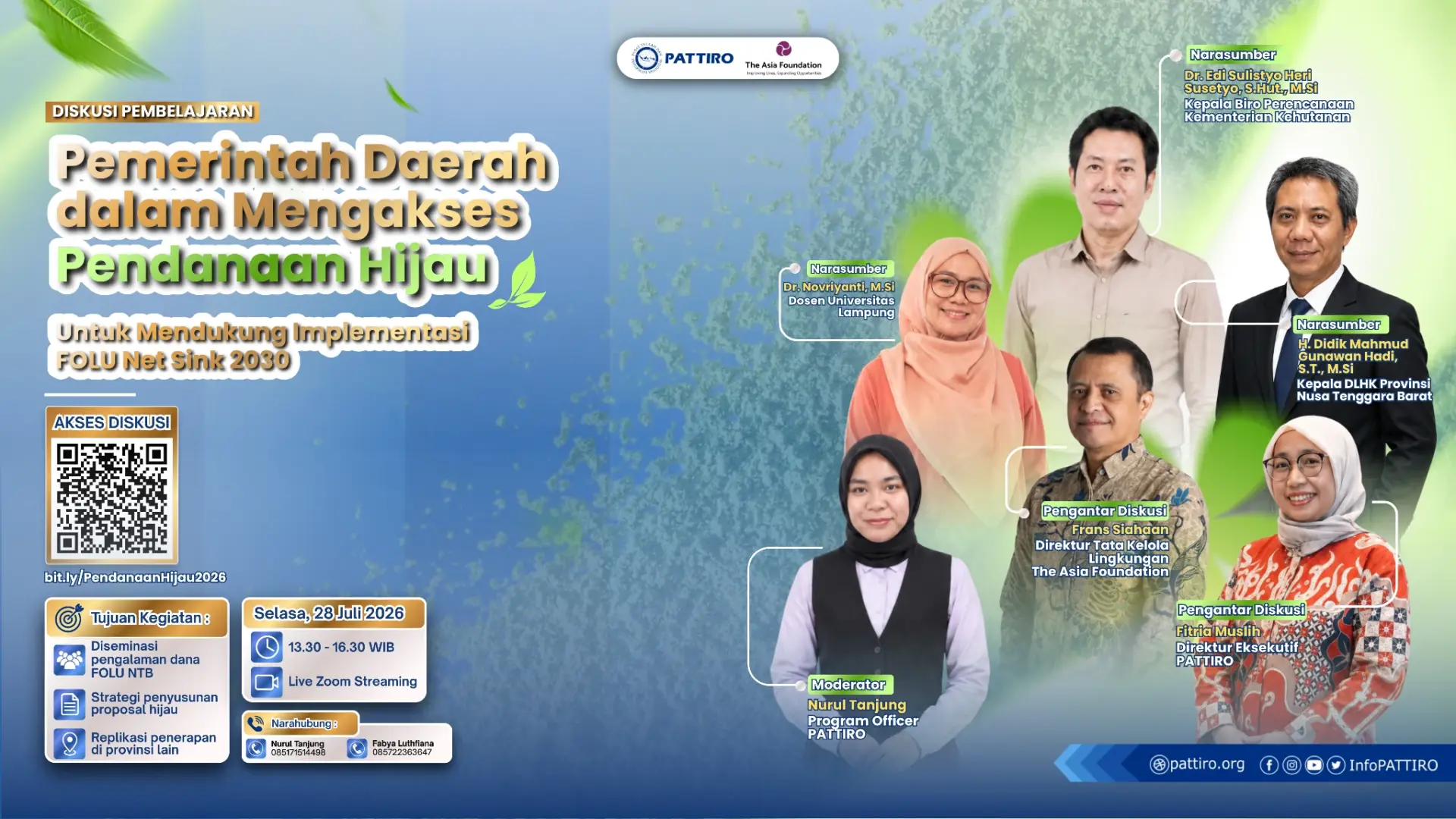
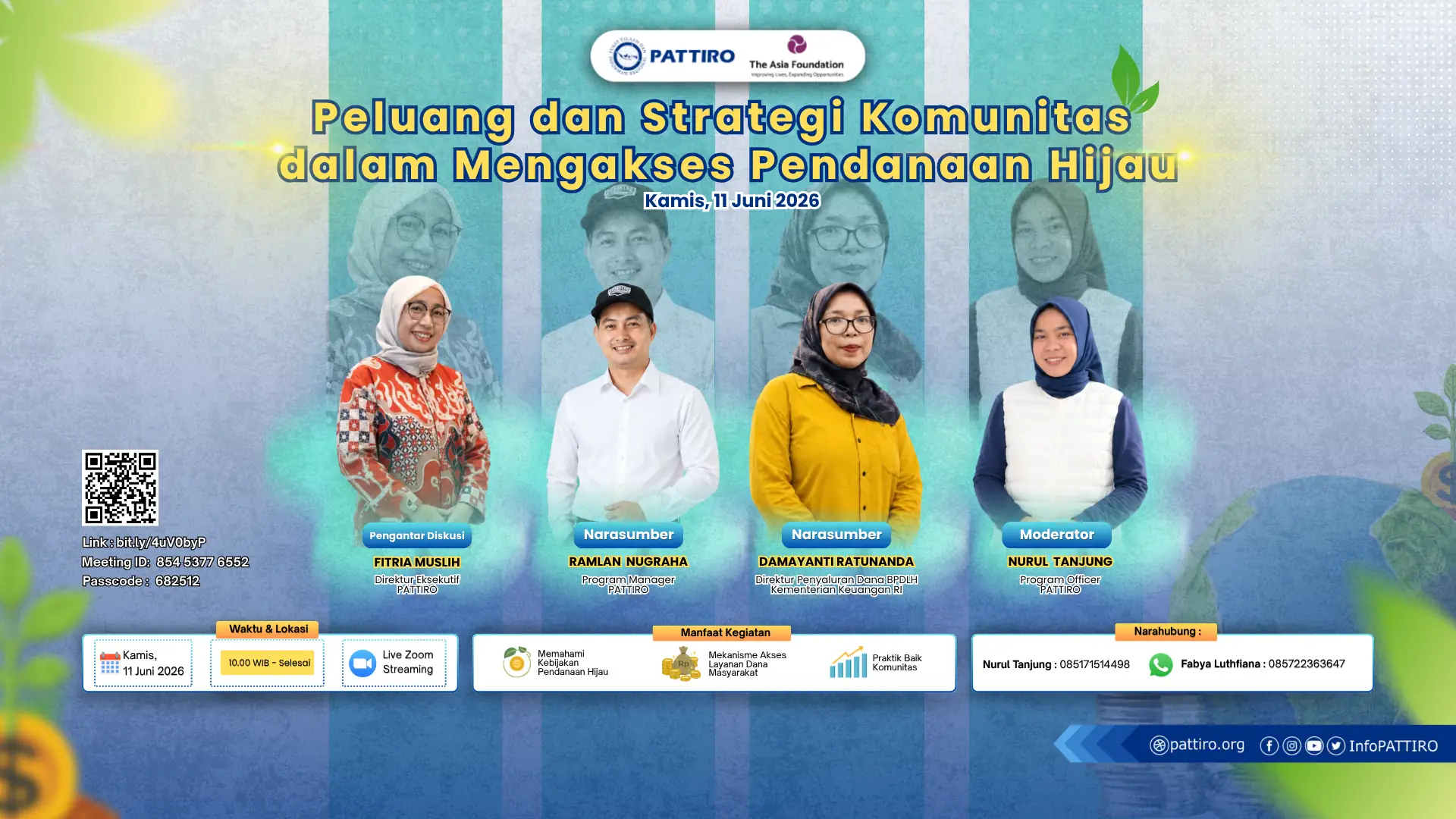
The Center for Regional Information and Studies (PATTIRO) organized an online dialogue entitled “Opportunities and Strategies for Communities in Accessing Green Financing” (11/06/2026). The event served as a shared dialogue and learning space for communities, civil society organizations, network partners, and regional stakeholders to better understand green financing opportunities — particularly through the Community Environmental Fund Service scheme, or Small Grant, managed by the Environmental Fund Management Agency (BPDLH).
The event featured Fitria Muslih as PATTIRO’s Executive Director, Marisca Wulansari from BPDLH/Ministry of Finance, Beni Nurfauzi from the BPDLH IT Team, and Ramlan Nugraha as PATTIRO’s Program Manager. The discussion was facilitated by Nurul Tanjung from PATTIRO and was attended by participants from various communities, institutions, and regions, including participants from Eastern Indonesia.
In the introductory session, Fitria Muslih emphasized that green financing should be viewed as a strategic instrument to strengthen community action at the grassroots level. According to Fitria, many local communities have been carrying out concrete work in managing forests, natural resources, and the environment, but continue to face limitations in accessing funding that could sustain these initiatives.
“This momentum is, in our view, critically important to provide capacity building for communities — particularly those that have demonstrated concrete action in forest management but remain constrained in accessing green financing. Green financing has become one of the key instruments for supporting the achievement of sustainable development and Indonesia’s climate commitments,” said Fitria.
Fitria further explained that the event was organized at a significant moment ahead of the reopening of opportunities under the Community Environmental Fund Service. The program was considered relevant as it provides direct grant access on a relatively small scale to communities, groups, and organizations contributing to the achievement of Indonesia’s FOLU Net Sink 2030 target. However, Fitria noted that green financing opportunities still face challenges in equitable distribution. The majority of recipients remain concentrated in Java and Sumatra, while communities in Eastern Indonesia remain largely underrepresented.
“We have observed that in Batch 4, communities faced many challenges in accessing green financing. More than two thousand proposals were submitted to the Ministry of Forestry and BPDLH, yet only 302 were accepted — representing just 14 percent. Many communities are not yet aware of the scheme, the proposal submission schedule, or the available green financing mechanisms, particularly in Eastern Indonesia and remote regions,” Fitria explained.
This situation demonstrates that access to funding depends not only on the availability of programs, but also on community readiness to understand requirements, prepare proposals, compile documents, build track records, and navigate digital submission systems. Capacity building is therefore essential to enable communities to formulate activity proposals that are relevant to regional needs and have a clear impact on both the environment and society.
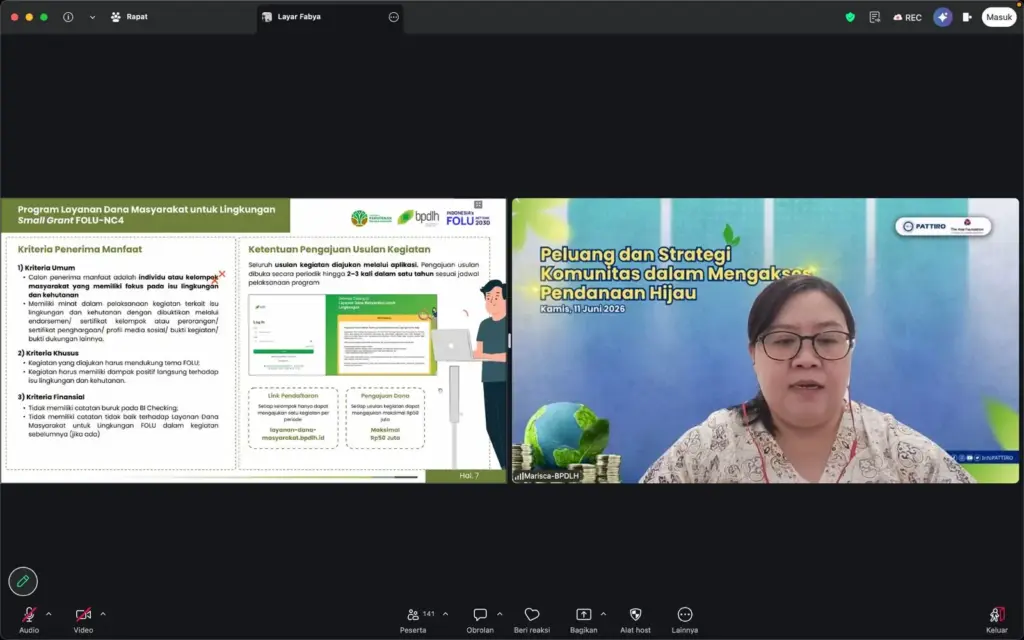
Marisca explained that the Community Environmental Fund Service forms part of the support framework for Indonesia’s FOLU Net Sink 2030, operating within the Result-Based Contribution scheme between Indonesia and Norway. The Norwegian Government has committed to supporting Indonesia’s FOLU Net Sink 2030 program through a Result-Based Contribution scheme of USD 216 million for the period 2022–2030. For RBC 2&3 and RBC 4 specifically, in addition to the regular financing scheme, a small grant scheme is also available.
“The Community Environmental Fund Service is a Ministry of Forestry program that channels grants to communities, groups, and organizations with the aim of achieving FOLU Net Sink 2030. The grant amounts are relatively small and are designed so that grassroots communities can contribute to the effort,” Marisca explained.
The Community Environmental Fund Service program covers three main themes: FOLU Goes to School, FOLU Terra (Community Welfare), and FOLU Biodiversity. FOLU Goes to School targets primary education institutions and the younger generation; FOLU Terra promotes the conservation and sustainable use of ecosystems, forests, and land while improving community welfare; and FOLU Biodiversity focuses on the conservation and sustainable utilization of biodiversity.
Eligible activity sub-themes include greening or reforestation, new and renewable energy, environmental services or ecotourism, river restoration, and waste management. Supported activity types include socialization, training, tree planting, mangrove planting, environmental cleanup actions, renewable energy initiatives, and forest protection actions.
“We hope this community environmental fund service can be accessed across all regions. In line with BPDLH’s mission, all services provided are expected to reach every part of Indonesia without exception and to be easily accessible to the public,” said Marisca.
To clarify the submission process, Beni Nurfauzi from the BPDLH IT Team provided a live demonstration of the Community Fund Service application. The demonstration covered the stages of creating an account, completing the group profile, uploading documents, filling in the responsible party’s data, specifying the activity location, preparing proposal information, completing the budget plan (RAB), and submitting the proposal through the system.
This technical explanation was particularly important given that some communities still face challenges in using digital platforms. Beni reminded prospective applicants to read the latest information on the application page before registering or submitting.
“When you access the login page, please read the latest information first. This information is very important, because every time a new submission period opens, it will indicate when it closes and what requirements must be fulfilled,” Beni explained.
From the perspective of community strategy, Ramlan Nugraha explained that PATTIRO’s role is to strengthen community readiness so that communities can independently access green financing. PATTIRO does not act as a funding intermediary, does not guarantee proposal acceptance, and does not charge fees for its mentoring services. PATTIRO’s role, together with regional network partners, is to facilitate learning spaces, assist communities in understanding requirements, and strengthen the quality of activity proposals.
“Communities are the primary actors as program planners, beneficiaries, and implementors. This community fund service scheme runs directly from the central government through BPDLH to the communities themselves,” said Ramlan.
Ramlan emphasized that the requirements in the funding application process should not be viewed as an administrative burden. Rather, they can serve as instruments for strengthening community governance, clarifying track records, improving planning quality, and building organizational credibility.
“The requirements set by BPDLH are not merely administrative prerequisites. At their core, they serve to improve the quality of our communities and organizations,” Ramlan explained.
Drawing on previous mentoring experience, Ramlan explained that a strong activity proposal must go beyond simply aligning with program themes. Communities need to demonstrate problem urgency, local potential, clear location rationale, activity track records, multi-stakeholder support, involvement of vulnerable groups, and the tangible environmental and social impact of the proposed activities.
“If a proposal simply involves tree planting, anyone can do that. What needs to be strengthened is its distinctiveness — what species are being planted, why the location matters, and how the activity delivers a greater impact for both the environment and the community,” said Ramlan.
As a follow-up, PATTIRO has designed a series of capacity-building activities for Small Grants Batch 5. The stages include community account creation, per-community proposal development, phased coaching clinics, activity proposal finalization, and mentoring through to the proposal submission process. In PATTIRO’s program design, the mentoring is structured as a discussion space for communities preparing their proposals to ensure the quality meets applicable requirements.
“Is this mentoring program paid? Absolutely not. This is purely to strengthen community capacity and to allow us, as civil society organizations, to grow together,” Ramlan affirmed.
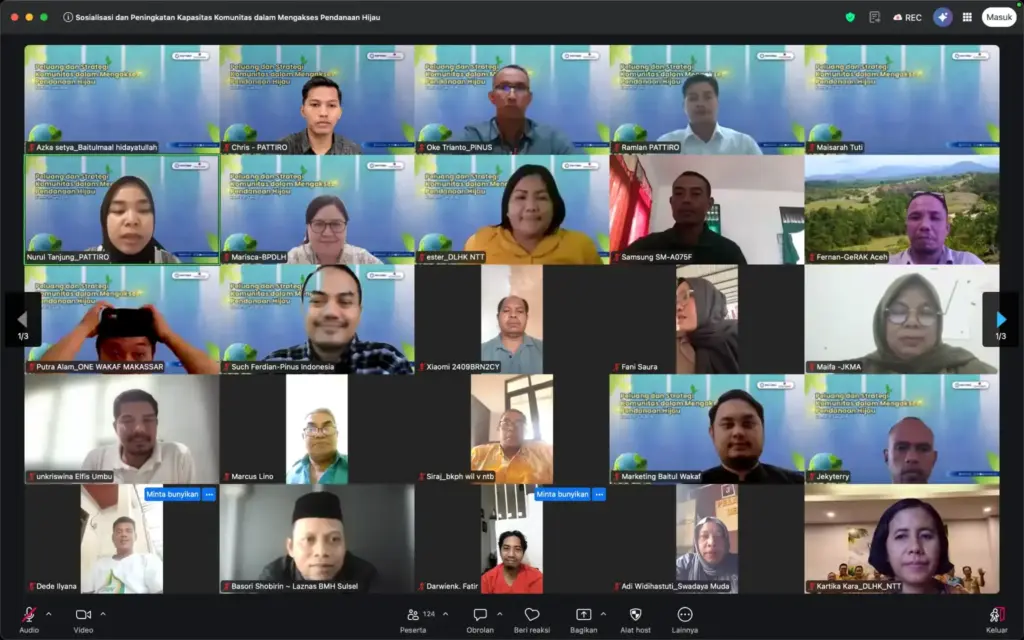
Through this event, PATTIRO reaffirmed its commitment to continuously strengthening the capacity of local communities to access green financing. This effort is expected to open a more inclusive space for communities that have long been working to protect forests, coastal areas, rivers, biodiversity, and the natural environment at the grassroots level.
With sustained capacity building, green financing can become more than just access to financial resources — it can serve as a pathway to strengthen community governance, improve the quality of activity proposals, expand multi-stakeholder collaboration, and ensure that environmental action delivers meaningful impact for society.