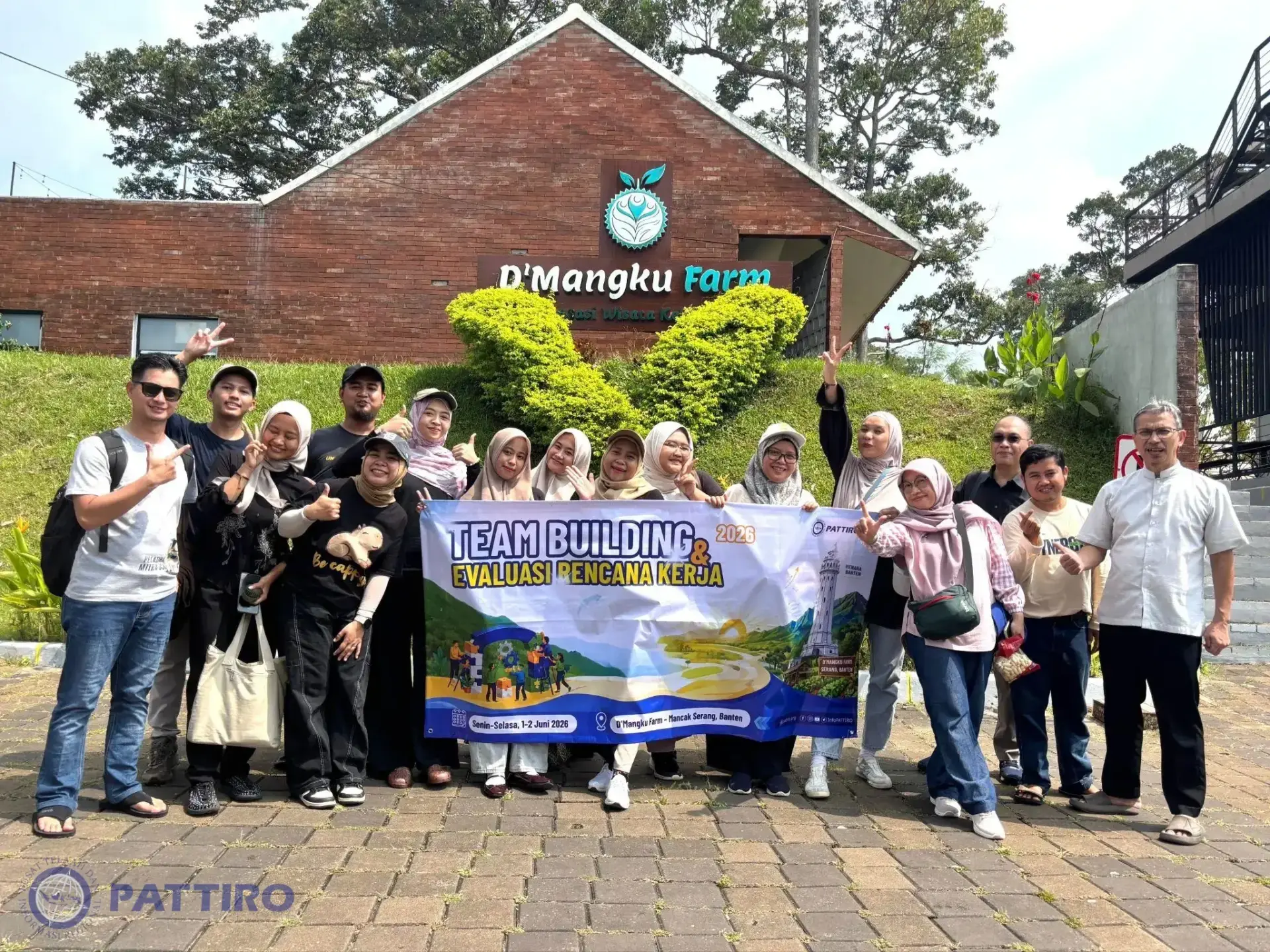
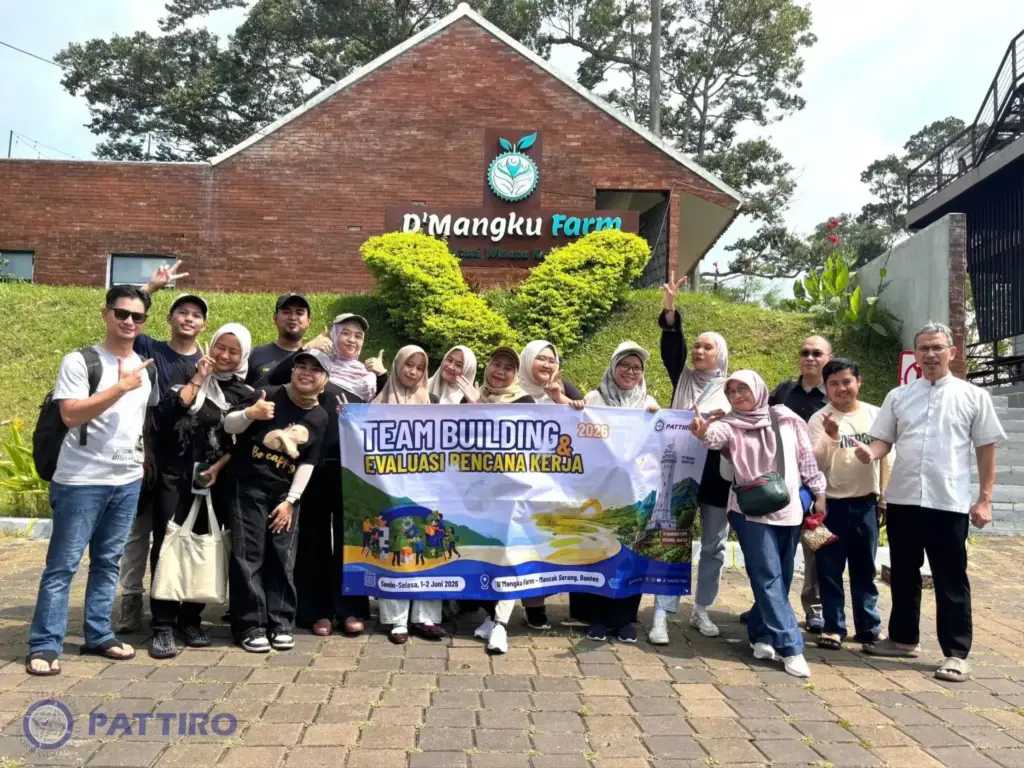
Sustained efforts to strengthen the internal capacity of an organization in carrying out advocacy, research, and community empowerment work are essential. PATTIRO organized its Team Building & 2026 Work Plan Evaluation at D’Mangku Farm, Mancak, Serang, Banten (1–2 June 2026). The event served as a shared space for reflection for the entire team to evaluate program achievements, identify unfinished agendas, and determine the organization’s work priorities going forward.
The activity is expected to strengthen PATTIRO’s direction in responding to a range of strategic issues, including transparency, public service accountability, public financial management, green financing, climate change, and gender mainstreaming in public policy. Through this event, PATTIRO also reaffirmed its commitment to continuously strengthening internal collaboration, inter-team communication, and governance, so that every institutional work process can run in a more solid, adaptive, and impactful manner for the public.
Work Plan Evaluation to Determine Priority Agendas
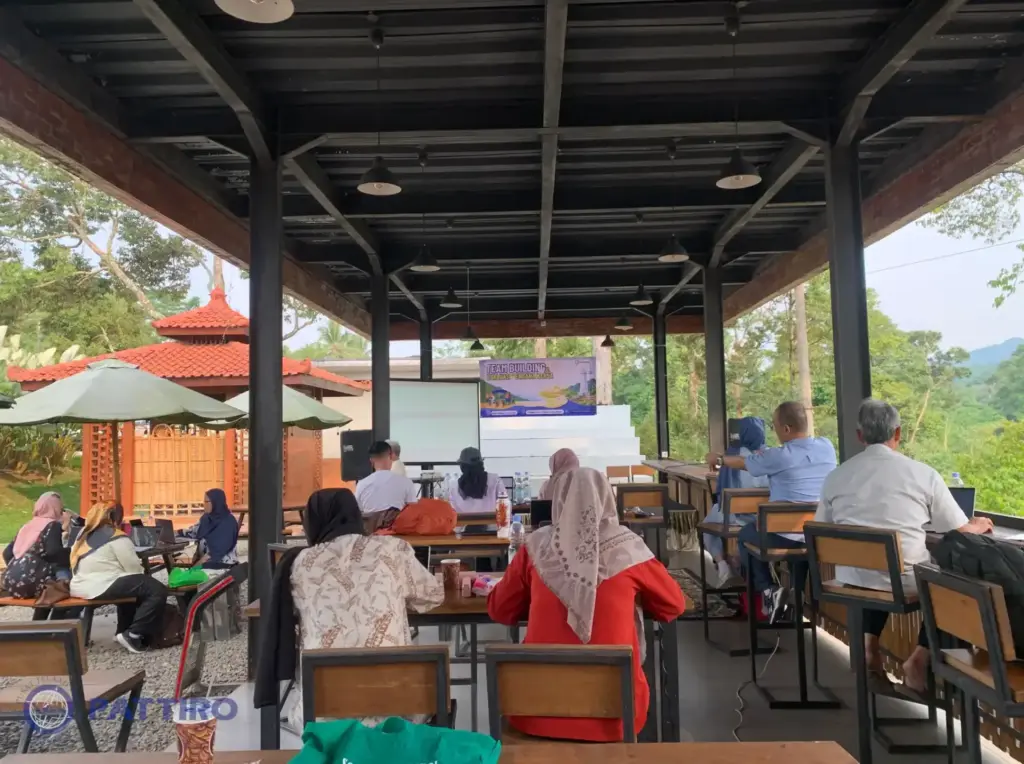
On the first day, Monday, 1 June 2026, the series of activities began with a joint journey from the PATTIRO office to D’Mangku Farm, Mancak, Serang, Banten. The trip served both as an opening activity and as an early opportunity to build a sense of togetherness before the team engaged in the main agendas that had been prepared. Upon arrival, the program continued with the PATTIRO 2026 Work Plan Reflection Session as the primary agenda for the day.
In the opening session, PATTIRO’s Executive Director, Fitria Muslih, conveyed that the work plan evaluation is a vital process in ensuring that the organization’s direction continues to align with its institutional goals and objectives. The evaluation was conducted to revisit programs that have been implemented, identify implementation challenges, flag agendas that have not yet been optimally executed, and determine work priorities that need to be strengthened over the next six months.
“The work plan evaluation is important to review programs that have been running, programs that have not yet been implemented, and to determine agendas that need to be collectively advanced going forward,” said Fitria in the opening session.
The reflection session also served as a strategic space for the entire team to revisit developments in policy issues relevant to PATTIRO’s areas of focus — particularly those related to PATTIRO’s three core focus areas: transparency, public service accountability, and public financial management reform. Through this activity, the PATTIRO team was encouraged not only to focus on implementing planned programs, but also to remain attentive to the dynamics of issues evolving at both the national and regional levels.
In addition, each team was expected to identify new advocacy opportunities aligned with the organization’s mandate. This is important to ensure that every aspect of PATTIRO’s work remains relevant, adaptive, and capable of responding to community needs and the continuously evolving challenges of public governance. In this way, every activity agenda can be carried out in a more focused, responsive, and impactful manner.
Discussion of PATTIRO’s Three Focus Areas
The work plan reflection session involved discussions on PATTIRO’s main work areas: transparency, public service accountability, Public Finance Management (PFM), and internal organizational operations and support. This discussion was an important part of reviewing achievements to date, identifying agendas that still need to be strengthened, and formulating more focused work priorities for the next six months.
In the transparency area, the discussion highlighted developments in the Open Government Indonesia (OGI) agenda, public information disclosure, green financing, and the optimization of public complaint services through SP4N-LAPOR!. In the public service accountability area, the team discussed issues of decentralization, climate change, and the planned deliberation of the Climate Change Management Bill in relation to gender perspectives and public policy governance. This agenda was considered important as it directly relates to PATTIRO’s efforts to promote more responsive, inclusive, and community-oriented governance.
In the Public Finance Management (PFM) area, discussion focused on PATTIRO’s achievements in strengthening the capacity of local governments, civil society organizations, communities, and other stakeholders to access alternative green financing. PATTIRO has also facilitated shared learning processes on good practices in collaboration with communities, BPDLH, and the OGI Secretariat, as well as supporting the development of green funding proposals in a number of regions.
In the operational area, the evaluation focused on strengthening the organization’s internal governance as a critical foundation for supporting the effectiveness of program work. Discussions covered financial management, office management, asset management, strengthening information technology systems, and knowledge management. Strengthening this area is important to ensure that organizational work processes can operate in a more orderly, efficient, accountable, and sustainable manner.
Team Building to Strengthen the Spirit of Collective Work
On the second day, Tuesday, 2 June 2026, the program began with a morning exercise session. This activity served as a refreshing opening following the reflection and work plan evaluation sessions held the previous day. Beyond fostering a more positive atmosphere, the morning exercise also helped boost the energy, fitness, and readiness of participants ahead of the team building agenda.
The team building session was designed to strengthen trust, coordination, communication, and cooperation among team members. Through a range of activities, participants were invited to appreciate the importance of collaboration, role distribution, and mutual support in navigating organizational challenges. The session also served as a shared learning space to deepen team cohesion and build more solid working patterns.
Strengthening internal capacity is not only about program planning and performance evaluation, but also about the quality of working relationships within the organization. Work related to advocacy, research, and community empowerment requires strong cross-role collaboration, open communication, and shared commitment from the entire team.
Through this activity, PATTIRO affirmed the importance of building an organization that is adaptive, collaborative, and mutually supportive. The spirit of togetherness cultivated during the team building session is expected to serve as an important foundation for the entire team in carrying out the organization’s work priorities in a more effective, focused, and impactful manner for the public.
Strengthening PATTIRO’s Direction Going Forward
The Team Building & 2026 Work Plan Evaluation served as an important milestone for PATTIRO to strengthen the organization’s direction — across programs, institutional aspects, and internal collaboration. Through the collective evaluation, PATTIRO was able to revisit its achievements, identify agendas that have not yet run optimally, and acknowledge the various challenges that still need to be addressed.
The forum also served as a strategic space for the entire team to realign the organization’s work priorities with the ever-evolving dynamics of public policy issues. In the context of civil society organization work, the ability to reflect, adapt, and respond to change is critically important to ensure that advocacy, research, and community empowerment efforts remain focused, relevant, and impactful.
With a focus on transparency, public service accountability, and public financial management, PATTIRO continues to strengthen its role as a civil society organization that promotes open, participatory, inclusive, and community-oriented governance.