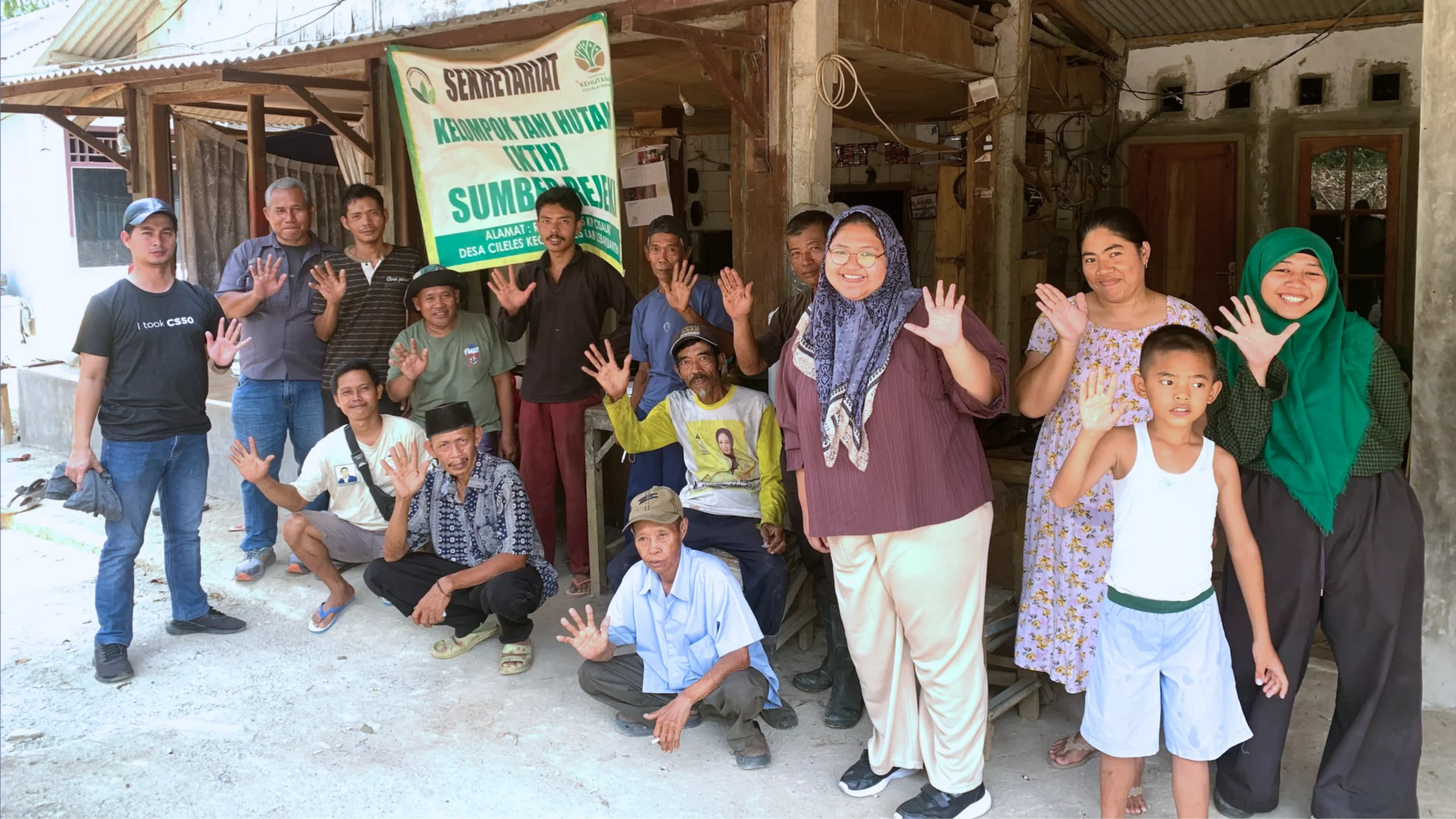
Lebak, October 21, 2026 – The development of social forestry enterprises plays a crucial role in strengthening local economies and promoting the sustainable use of natural resources. However, limitations in infrastructure and access to capital, combined with the impacts of climate change, continue to pose challenges to the productivity of community-based enterprises. To better understand these conditions, PATTIRO, in collaboration with the Community Forestry Communication Forum (FKKM), conducted a field visit to the *Sumber Rejeki* Forest Farmer Group (KTH) in Cileles Village, Lebak Regency, Banten Province.
“Sumber Rejeki” is a community-based organization established in 2022 under the leadership of Mr. Angling, currently comprising 237 members. Within this organization, there are three Social Forestry Business Groups (KUPS) focused on the cultivation of Cavendish bananas, bamboo, and rhizomes. These groups were formed to develop economic activities based on the potential of forest products and the utilization of social forestry land, while simultaneously creating business opportunities to improve the income and well-being of their members. The development of these enterprises is intended not only to increase production but also to generate added value and foster long-term economic self-reliance within the community.
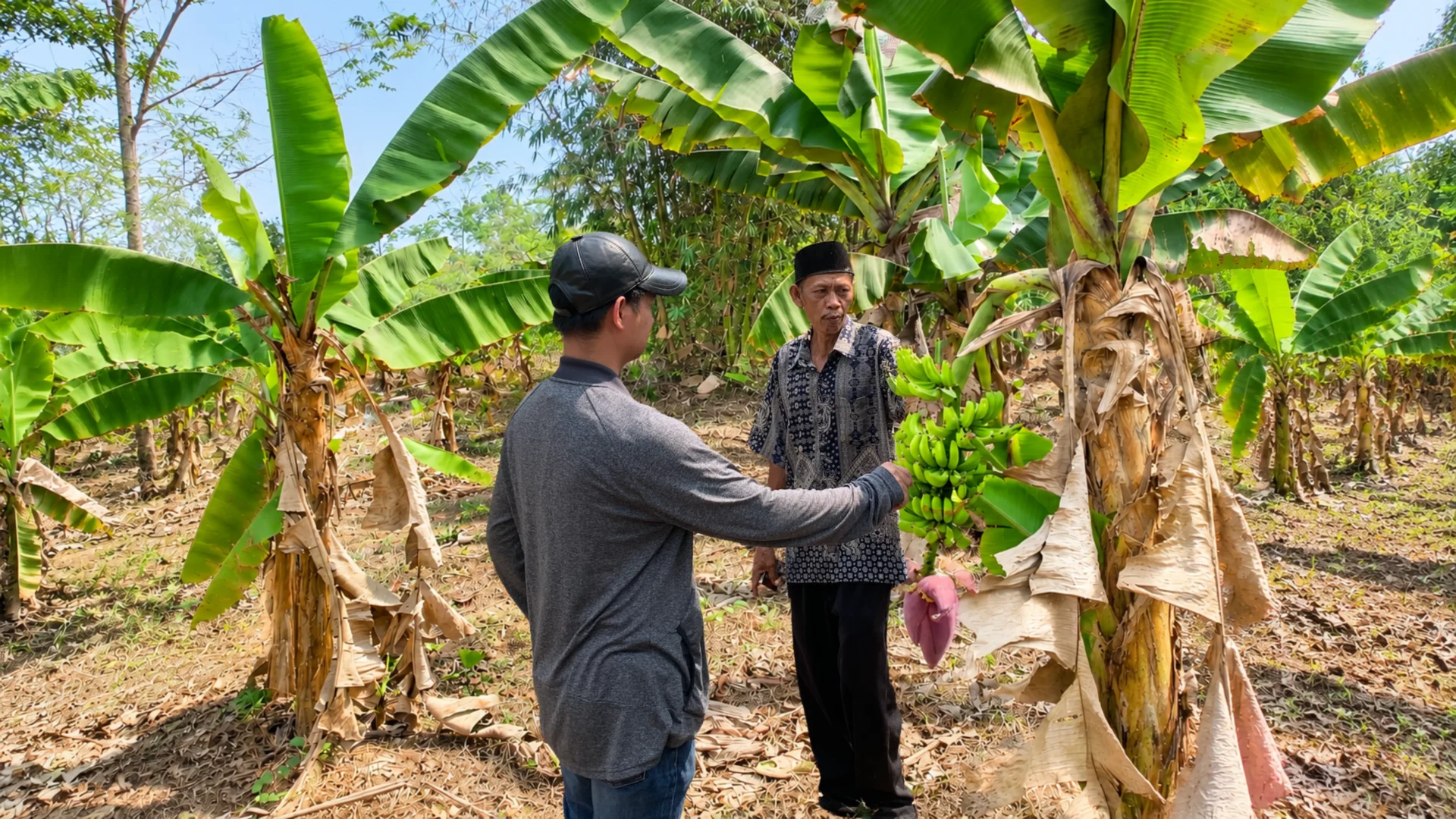
The cultivation of Cavendish bananas is one of the “Sumber Rejeki” group’s ventures with promising market potential. Developed over approximately five years across 26 hectares of land, the operation has established a partnership with a catering provider in Cikarang that requires a supply of up to 60 tons per day. However, a prolonged seven-month drought has led to water scarcity, stunted plant growth, and caused a drastic decline in crop yields. This situation has made it difficult for farmers to meet market demand, highlighting the urgent need for productivity recovery and crop rejuvenation once water availability improves.
“Market demand is actually very high; for instance, a partner in Cikarang requires a supply of up to 60 tons of bananas per day. However, we are currently unable to meet this demand because production has declined due to a prolonged drought. Water availability is a critical factor for proper crop maintenance and for ensuring that the operation can once again yield optimal harvests,” explained Angling, head of KTH Sumber Rejeki.
Limited irrigation infrastructure is the primary obstacle to developing the Cavendish banana enterprise at KTH Sumber Rejeki. Management notes that the construction of deep wells and reservoirs, along with the provision of water pumps, is essential to maintain water availability during the dry season. However, the high cost of such infrastructure makes it difficult for the farmers to fund these requirements independently, preventing the optimization of farm productivity.
Beyond water-related issues, a lack of capital also hinders business development. According to the management, cultivation costs for bananas from land preparation to harvest are estimated at IDR 85 million per hectare. Since harvests occur in stages, a financing scheme tailored to the production cycle and the farmers’ operational needs is required to ensure the business can grow sustainably.
“The challenge isn’t just about marketing the harvest; it’s also about keeping production running. We need support in the form of capital and irrigation facilities so that the farm can become productive again and we can capitalize on existing market opportunities. If these fundamental needs are met, we expect production to increase, allowing the business to deliver greater economic benefits to its members,” said Angling, head of KTH Sumber Rejeki.
In addition to Cavendish bananas, the bamboo and rhizome (spice/medicinal root) production units known as KUPS also hold potential as alternative economic sources for the community. Developing these units requires support through improved production quality, the processing of derivative products, expanded market access, and institutional strengthening. With better governance, KTH Sumber Rejeki is expected to be able to increase the value-added of its products and sustainably boost the income of its members.
The development of social forestry enterprises by KTH Sumber Rejeki requires integrated support, including water infrastructure, access to capital, and the enhancement of business management capacity. Collaboration among the community, the government, business partners, and supporting organizations is also essential to optimize the potential of Cavendish bananas, bamboo, and rhizomes, thereby increasing their economic value. By strengthening production, institutional frameworks, financing, and marketing, KTH Sumber Rejeki is expected to improve the economic self-reliance of its members and bolster the resilience of its operations against climate-related risks. These efforts simultaneously promote an inclusive and sustainable approach to social forestry management.